The Simurgh of Mount Qaf
Narrated in Swedish, English, Norwegian
Read-along text in English, Swedish, Norwegian, Danish, Finnish, German and Spanish.
Narrated in Swedish, English, Norwegian
Read-along text in English, Swedish, Norwegian, Danish, Finnish, German and Spanish.
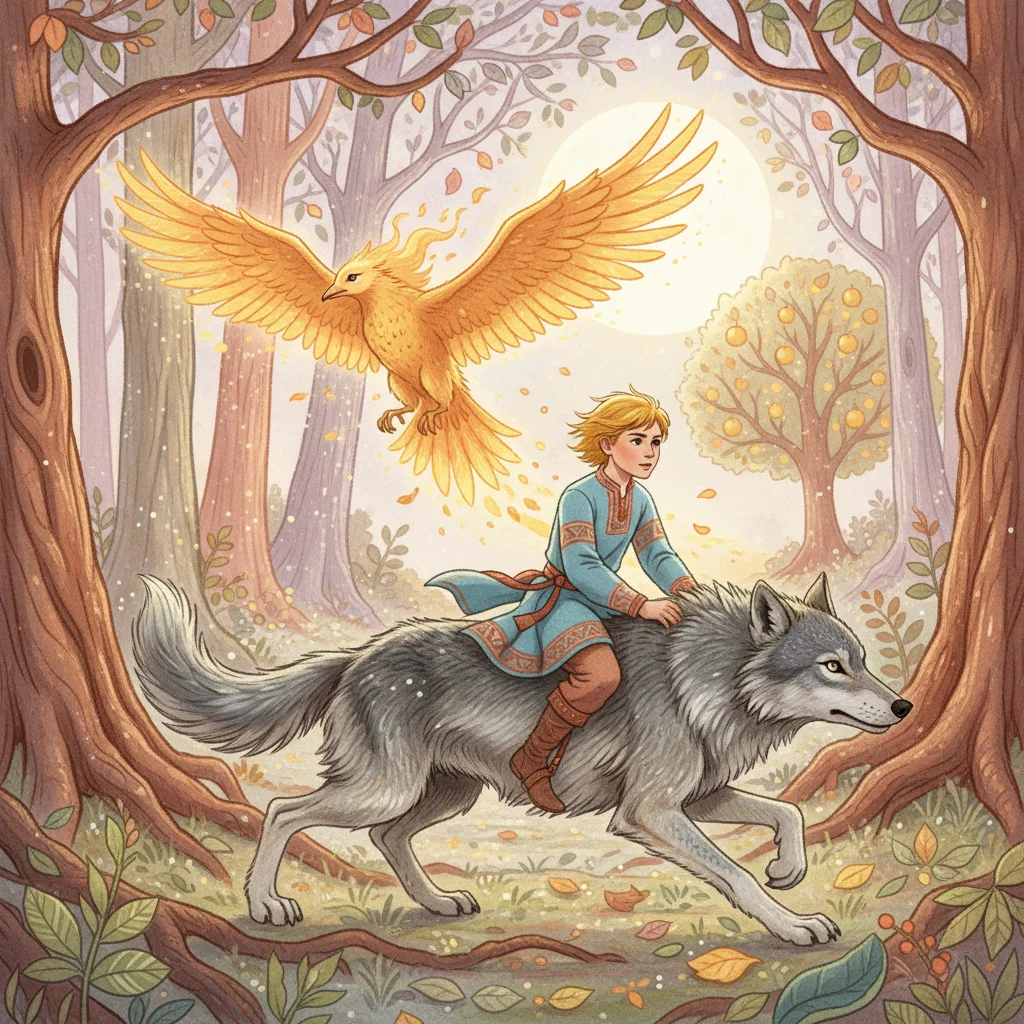
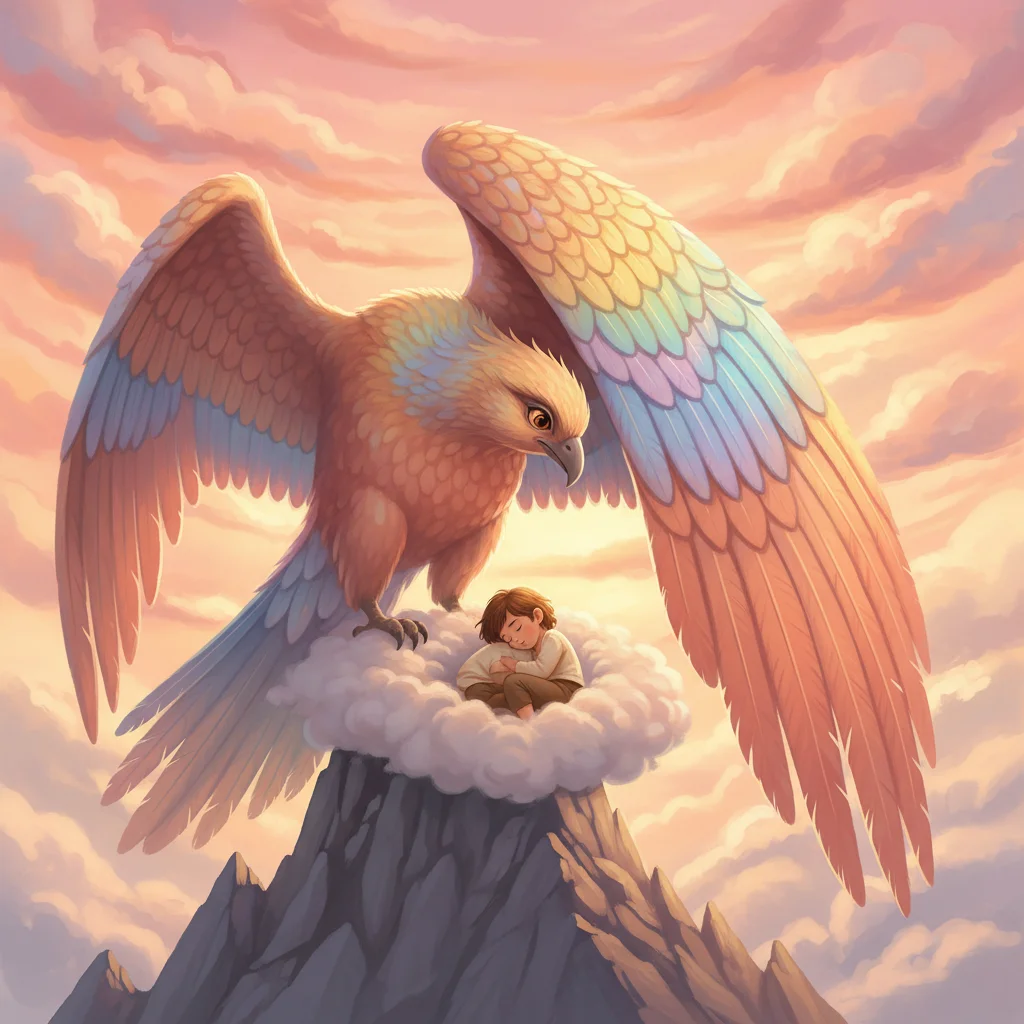
Far beyond the Persian valleys, where the desert meets the sky and the date palms sway in the evening wind, there rises a mountain no map knows. Its name is Qaf, and its peak is hidden inside silver clouds. On this mountain, in a nest as wide as a garden, lives the Simurgh, the oldest bird in the world. Her feathers shimmer like rainbows after rain, and her voice is soft as wind through reeds. She has been here since the stars were young, and she has seen every sunrise since time began. She knows every direction of the sky and every scent on the wind; she knows when the sand cools and when the moon is yellow as honey. This evening the Simurgh listens carefully, very carefully, because down in the valley she hears something she did not expect, a tiny, tiny sound that does not belong among stones and wind.
It is a small cry, thin as a silken thread, so thin that only ears which have listened for a thousand years can hear it. The Simurgh leans her great head over the cliff and looks down. There, among the stones beside a cool spring, lies a tiny child wrapped in a blue shawl, with little gold stars embroidered along the edge. No grown-up is nearby. Only the stars are watching, and one lonely sand fox padding past without stopping. The Simurgh does not hesitate. She spreads her wings, so wide they shadow half the valley, and glides down with a single soft beat that does not even stir the reeds beside the spring. She lifts the child as gently as one lifts an egg, holds him against her warm chest, and carries the baby up to her nest in the clouds.
Inside the nest there are soft feathers in every color that exists: rose-red, moss-green, sky-blue and sun-yellow, and a few that glitter as if they had caught a spark of moonlight. It smells of saffron and rain and warm stones, and deepest of all there is a hint of cinnamon and pepper-spice from caravan roads far away. The Simurgh sets the child among the feathers and sings a low note that rocks the clouds. She gives the child a name: Parvâne, which means butterfly. For like a butterfly the child had come to her, light and unexpected, and just as lightly nothing would be allowed to frighten him. Parvâne stops crying and sleeps, wrapped inside a wing softer than any blanket in the world. The stars above the mountain blink slowly, one by one, as if they too want to wish him goodnight.
Continue the story in Fabeligo, read aloud and illustrated
Listen in the app